US State Department Information
Traveling with Children
Question: If a child (under the age of 18) is traveling with only one parent or someone who is not a parent or legal guardian, what paperwork should the adult have to indicate permission and legal authority to have that child in their care? Answer: Due to increasing incidents of child abductions in disputed custody cases and possible victims of child pornography, Customs and Border Protection (CBP) strongly recommends that unless the child is accompanied by both parents, the accompanying adult should have a note from the child’s other parent (or, in the case of a child traveling with grandparents, uncles or aunts, sister or brothers, or friends, a note signed by both parents) stating, “I acknowledge that my wife/husband, etc is traveling out of the country with my son/daughter. He/She/They have my permission to do so.” CBP also suggests that this note be notarized.
While CBP may not ask to see this documentation, if they do ask, and you do not have it, you may be detained until the circumstances of the child traveling without both parents can be fully assessed. If there is no second parent with legal claims to the child (deceased, sole custody, etc.) any other relevant paperwork, such as court decision, birth certificate naming only one parent, death certificate, etc., would be useful.
Adults traveling with children should also be aware that, while the U.S. does not require this documentation, many other countries do; failure to produce notarized permission letters and/or birth certificates could result in travelers being refused entry (Canada has very strict requirements in this regard.)
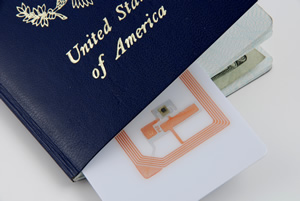 All US and Canadian citizens age 15 and younger should also have a copy of their birth certificate if traveling by land or sea. Teens between the ages of 16-18 should have a copy of their birth certificate if traveling with an adult-supervised school as part of a cultural, religious or athletic group. In such a group, teens are exempt from travel rules requiring a parent being present to provide a passport. However, the teen should provide a copy of the birth certificate. The chaperoning adult should be able to provide a list of the children being accompanied and a sign a certification that they have permission from all the parents/guardians for all the children in the group to go on the trip. If just traveling with friends or family, all 16-18 year olds will need a passport as will all other U.S. and Canadian citizens over the age of 15.
 Lawful permanent residents (LPRs), refugees and asylees will continue to be able to use their alien registration card (Form I-551) issued by DHS or other valid evidence of permanent resident status or refugee or asylee status to apply for entry to the United States.
Resource information about registering your travel and other helpful hints are included here:
http://travel.state.gov/travel/tips/registration/registration_4789.html